Key Takeaways
- Georgia red clay is rich in nutrients but lacks the pore space necessary for easy root expansion and water drainage.
- Species like the Loblolly Pine and Willow Oak have evolved specialized root systems to penetrate dense clay layers.
- Compaction is the primary enemy of trees in clay; avoiding heavy machinery near the root zone is critical.
- Soil amendments like organic compost can help break up clay particles over time through a process called flocculation.
- Proper planting depth is more important in clay than in sandy soils to prevent root suffocation or girdling.
If you have ever tried to dig a fence post or plant a garden in Northeast Georgia, you are intimately familiar with the state’s most famous geological feature: the red clay. This soil, colored by high levels of iron oxide, is the defining characteristic of the Piedmont region. While it is often the subject of frustration for landscapers and homeowners, Georgia red clay is actually a powerhouse of mineral wealth. The challenge lies in its physical structure. Clay particles are microscopic and flat, stacking together like sheets of paper. This creates a dense, heavy medium that resists water penetration and chokes off oxygen to the roots of sensitive plants.
For a tree to survive in this environment, it must be a survivor. It needs a root system capable of exerting tremendous pressure to find cracks in the earth and the ability to withstand periods of extreme saturation followed by concrete-like dehydration. Understanding which species are the true red clay survivors is the key to building a landscape that lasts for generations rather than just a few seasons.
The Science of the Red Dirt
To understand why certain trees thrive while others wither, we must look at the chemistry of the clay itself. Georgia clay is primarily composed of kaolinite. Because the particles are so small, they have a massive surface area that holds onto water and nutrients tightly. This is why clay soil is often more fertile than sandy soil; the nutrients simply do not wash away as easily. However, that same surface area creates high suction tension, making it difficult for some trees to actually pull that water into their vascular systems.
Furthermore, clay is prone to compaction. When heavy equipment or even consistent foot traffic moves over wet clay, the tiny particles are squished together, eliminating the macro-pores that hold the air roots need to breathe. Without oxygen, the roots undergo anaerobic respiration, which leads to root rot and the eventual decline of the canopy. The survivors listed below have found ways to navigate these subterranean obstacles.
Top Performers for the Georgia Piedmont
When selecting trees for your Cornelia or Gainesville property, looking toward native species is always the safest bet. These trees have spent thousands of years adapting to the local iron-rich soil.
The Loblolly Pine (Pinus taeda)
The Loblolly Pine is the workhorse of the Georgia timber industry for a reason. It is exceptionally tolerant of poor, acidic, and heavy soils. Unlike some evergreens that require perfect drainage, the Loblolly can handle the wet feet that often occur in clay basins after a heavy Georgia thunderstorm. Its deep taproot helps it anchor firmly into the subsoil, making it a resilient choice for wind resistance as well.
The Willow Oak (Quercus phellos)
The Willow Oak is a favorite for urban and suburban planting throughout the state. It produces small, willow-like leaves that are easy to clean up, but its real strength is underground. Willow Oaks are remarkably tolerant of the high pH fluctuations often found in managed clay soils and can withstand the restricted root zones of residential lots. They grow into massive, stunning shade trees that seem to shrug off the density of the red dirt.
The Eastern Red Cedar (Juniperus virginiana)
If you have a spot where the clay dries out into a hard, cracked brick in the middle of July, the Eastern Red Cedar is your best friend. This tree is nearly indestructible once established. It is highly drought-tolerant and can grow in soil so alkaline or acidic that other trees would perish. It provides excellent privacy screening and windbreaks for Georgia farmsteads.
Overcoming the Compaction Challenge
Even the hardiest survivor will struggle if the soil is turned into a parking lot. Compaction is the silent killer of Georgia trees. In a natural forest setting, the floor is covered in a thick layer of leaf litter and organic matter. This mulch layer acts as a shock absorber for raindrops and footsteps, while the decomposing leaves feed the soil microbes that keep the clay fluffy.
In a suburban yard, we often remove the leaves and replace them with turfgrass. This leaves the clay vulnerable. To help your trees thrive, it is vital to establish a wide mulch ring around the base. This prevents lawnmowers from compacting the soil near the trunk and mimics the forest floor environment. Using wood chips from a local tree service is an excellent way to introduce the carbon necessary to break up the clay’s iron-grip.
Planting Techniques for Success
In sandy soil, you can get away with a sloppy planting job. In Georgia clay, a mistake at the start is a death sentence. The most common error is digging a hole that is too deep and too narrow. In clay, you should dig a hole that is twice as wide as the root ball but no deeper than the root ball itself. In fact, many arborists recommend planting the tree slightly high, with the root flare about an inch or two above the surrounding grade.
This high planting ensures that the most sensitive part of the root system stays above the bathtub that often forms in a clay hole. If you dig a deep hole and fill it with loose potting soil, the surrounding clay acts like a ceramic pot. When it rains, the water fills the hole and cannot drain out, essentially drowning the tree. By planting in a wide, shallow bowl, you encourage the roots to spread horizontally into the native clay rather than circling inside a hole they cannot escape.
The Role of Mycorrhizae
One of the secrets to tree survival in Georgia is a symbiotic relationship with soil fungi called mycorrhizae. These fungi attach to tree roots and extend far into the clay, acting as a secondary root system. They are much better at extracting phosphorus and water from tight clay particles than the tree roots are. When planting in red clay, using a soil inoculant that contains these fungi can significantly increase the survival rate of new transplants. It is nature’s way of helping the tree eat the dense minerals found in our local dirt.
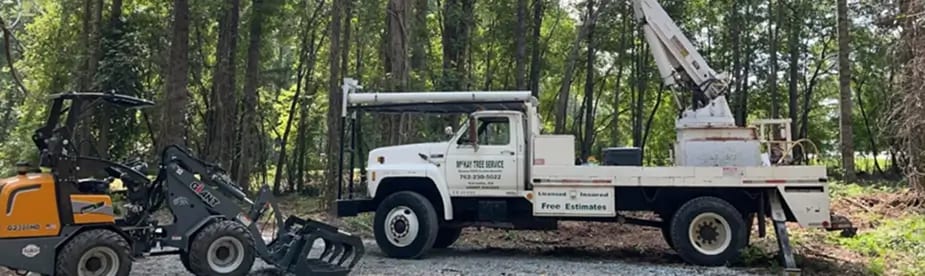
At McKay Tree Service, we know Georgia red clay better than anyone. With over 11 years of hands-on experience in Habersham and Hall counties, our family-owned team understands the unique challenges of maintaining tree health in our local soil. As a 5-star rated company in Cornelia, GA, we are fully licensed, bonded, and insured to handle everything from precision tree trimming to 24/7 emergency removals. Our certified arborist can help you identify which of your trees are struggling with soil compaction or root rot and provide expert cabling or forestry mulching services to save them. Voted Nextdoor Tree Service of the Year, we pride ourselves on respectful, top-quality service and offer special discounts for military and first responders. Whether you are in Gainesville, Clarkesville, or Flowery Branch, we have the specialized equipment to manage your landscape safely and efficiently. Contact McKay Tree Service at (762) 227-1035.
Frequently Asked Questions by Homeowners in Georgia
1. Why is Georgia soil so red in Georgia?
The red color comes from iron minerals in the clay that have oxidized, essentially rusting over thousands of years of exposure to air and water.
2. Can I add sand to clay to improve drainage?
No, adding sand to clay often creates a substance similar to concrete. It is much better to add organic compost or wood chips.
3. How do I know if my clay soil is compacted in Georgia?
If water puddles on the surface for hours after a rain or if you cannot easily push a screwdriver into the ground, it is likely compacted.
4. Do I need to fertilize trees in red clay in Georgia?
Clay holds nutrients well, so you may not need much fertilizer. A soil test is the best way to determine what is actually missing.
5. Is red clay acidic or alkaline in Georgia?
Most Georgia red clay is naturally acidic, with a pH usually falling between 4.5 and 5.5, which many native trees prefer.
6. What is the best mulch for clay soil?
Arborist wood chips are excellent because they break down slowly and provide a home for beneficial soil microbes.
7. Can I grow fruit trees in Georgia clay?
Yes, but they often require extra care, such as planting on a berm or hill to ensure the roots do not get waterlogged.
8. Why do my tree roots stay near the surface in clay in Georgia?
Roots go where the oxygen is. In heavy clay, there is more oxygen near the surface, leading to the shallow root patterns often seen in Georgia yards.
Summary Checklist: Managing Trees in Clay
| Condition | Risk Level | Recommended Action |
|---|---|---|
| Standing water near the trunk | High | Improve site drainage or implement drainage solutions to reduce prolonged root saturation |
| Surface roots visible in the lawn | Low | Apply a proper mulch layer to protect roots, regulate moisture, and reduce mower damage |
| Yellowing leaves (chlorosis) | Moderate | Test soil conditions to identify nutrient availability issues, pH imbalance, or root stress |
| Soil cracking during summer heat | Moderate | Adjust deep watering practices during drought periods to reduce moisture stress and soil shrinkage |
| Heavy construction traffic over the root zone | High | Assess soil compaction and implement root zone recovery measures to restore airflow and root function |
Final Advice
If you notice any of these warning signs, do not wait for a storm to force the issue. A professional assessment from an arborist can determine if the tree can be saved through specialized care or if it must be removed to protect your property. Managing trees in Georgia red clay requires a long-term commitment to soil health. Avoid the temptation to use high-nitrogen chemical fertilizers as a quick fix, as these can sometimes harm the beneficial fungi that trees rely on in dense soils. Instead, focus on mechanical aeration and the consistent application of organic matter to the soil surface. Remember that a tree’s root system can extend two to three times the width of the canopy, so soil management must happen far beyond the trunk. By protecting the soil from compaction and ensuring proper planting depths, you can turn the challenges of Georgia’s toughest soil into a foundation for a magnificent, enduring forest on your own property. Always consult with a professional before making major changes to the grade of your land, as adding even a few inches of clay over an existing root system can be fatal to established trees.