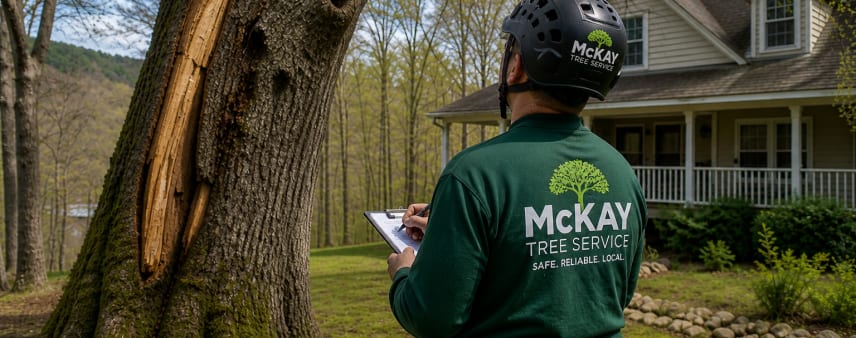
Large dead tree leaning dangerously over a Cornelia, GA home roof before storm season.

Protect Your Home: Tree Removal in Cornelia During Georgia Storm Season

Key Takeaways Georgia storm season runs March–November, bringing thunderstorms and high winds to Cornelia and Hall County Dead, dying, or diseased trees become dangerous projectiles during storms, risking home damage and injury Overgrown trees near structures can cause $10,000–$50,000+ in roof, siding, and window damage when branches fall Professional tree removal eliminates hazards before storms […]

CONTINUE READING from Protect Your Home: Tree Removal in Cornelia During Georgia Storm Season

Large oak tree blocking a paved driveway in Habersham County Georgia

What to Do After a Tree Falls Across a Driveway in Northeast Georgia

Key Takeaways: Safety First: Treat every fallen tree near a driveway as a potential electrical hazard until cleared by professionals. Documentation: Take clear photos for insurance claims before any debris is moved or cut. Immediate Access: A blocked driveway is an emergency if it prevents medical access or egress for vehicles. Professional Gear: Avoid DIY […]

CONTINUE READING from What to Do After a Tree Falls Across a Driveway in Northeast Georgia

Oak branches arcing electricity from Habersham County power line

Power Line Hazards: Managing Overgrown Trees

Key Takeaways Electricity can arc from a power line to a tree branch without direct contact, creating a lethal fire hazard. Homeowners are legally and financially liable for damages if private trees interfere with public utility lines. Standard pruning techniques do not apply near high-voltage lines; specialized insulated tools are mandatory. High winds and ice […]

CONTINUE READING from Power Line Hazards: Managing Overgrown Trees

southern pine beetle pitch tubes visible on pine tree trunk in Georgia close up

Georgia Pine Survival: Spotting Southern Pine Beetle Infestations Early

Key Takeaways: The Southern Pine Beetle (SPB) Threat: SPB is the most destructive forest insect in the Southeast, capable of killing a healthy pine in just 2 to 4 weeks. Pitch Tubes: Small, popcorn-shaped globs of white or reddish resin on the bark are the primary “first alerts” that beetles are boring into your tree. […]

CONTINUE READING from Georgia Pine Survival: Spotting Southern Pine Beetle Infestations Early

Dense thicket of overgrown brush encroaching on a Habersham County home.

When Overgrown Brush Becomes a Property Hazard in Habersham County

Key Takeaways: Fire Ignition: Dry brush acts as a ladder fuel, allowing ground fires to climb into the tree canopy. Pest Breeding: Overgrowth provides the perfect habitat for ticks, snakes, and rodents near your home. Property Damage: Invasive vines and thickets can trap moisture against structures, leading to rot. Drainage Issues: Unmanaged vegetation clogs natural […]

CONTINUE READING from When Overgrown Brush Becomes a Property Hazard in Habersham County

fallen tree on house after storm in North Georgia emergency removal

When Should You Call for Emergency Tree Removal?

Key Takeaways Immediate Hazards: Any tree in contact with power lines, leaning precariously over a structure, or blocking emergency access requires immediate professional intervention. Structural Red Flags: Deep trunk cracks, hollow cavities, and lifting root plates are signs of “imminent failure.” The Post-Storm Audit: High winds and heavy rains often reveal hidden weaknesses; a post-storm […]

CONTINUE READING from When Should You Call for Emergency Tree Removal?

Oak tree root plate heave after Gainesville GA rainstorm

How Heavy Rain Can Affect Tree Stability in Gainesville, GA

Key Takeaways: Soil Liquefaction: Heavy rain turns Georgia’s dense clay into a soft, unstable medium that loses its grip on heavy root systems. Increased Load: A rain-soaked canopy can add thousands of pounds of weight, shifting the tree’s center of gravity. Root Heave: Visible lifting of the soil near the trunk is a critical indicator […]

CONTINUE READING from How Heavy Rain Can Affect Tree Stability in Gainesville, GA

tree inspection in Habersham County GA identifying storm damage risk

Don’t Wait for the Gust: Pre-Spring Tree Inspections in Habersham County

Key Takeaways: The “Spring Surge” Risk: Georgia’s spring weather brings high-velocity wind gusts and heavy rains that test the structural integrity of dormant trees. Early Detection: Inspecting trees before the “leaf-out” phase allows for a clearer view of structural cracks, hollows, and fungal growth that are often hidden by summer foliage. The “Sail Effect”: Dense, […]

CONTINUE READING from Don’t Wait for the Gust: Pre-Spring Tree Inspections in Habersham County

Leaning loblolly pine tree showing a shallow root system in Northeast Georgia clay soil

Loblolly Pine Problems in Northeast Georgia: Leaning, Root Failure & Safety Risks

Loblolly pines in Northeast Georgia commonly lean or fail due to shallow root systems in clay soil, saturated ground after heavy rain, strong winds, and stress from pests like the Southern Pine Beetle or diseases such as Fusiform rust. When roots lose stability or decay develops, these tall pines can fail suddenly, making professional evaluation […]

CONTINUE READING from Loblolly Pine Problems in Northeast Georgia: Leaning, Root Failure & Safety Risks

An arborist is inspecting a mature oak tree in Habersham County

How Often Trees in Habersham County Actually Need Professional Tree Care

Most trees in Habersham County need professional care every 3–5 years, depending on species, age, location, and exposure to storms. Young trees often require structural pruning every 2–3 years, while mature trees near homes, power lines, or roads should be inspected more frequently to reduce safety risks caused by Northeast Georgia’s climate. Key Takeaways Trees […]

CONTINUE READING from How Often Trees in Habersham County Actually Need Professional Tree Care