When storms strike, large trees are among the first to show damage. Cracked trunks, hanging limbs, and uprooted bases can make even healthy trees unstable. Quick professional removal helps prevent secondary accidents like falling branches or further structural collapse.
Common Post-Storm Risks:
- Trees leaning toward homes or power lines
- Split or hanging branches are ready to drop
- Exposed roots weakening the base
- Cracked trunks hidden by bark
- Fallen trees blocking access or driveways
Leaving storm-damaged trees unattended increases danger to your property and family. Proper assessment and removal keep your home safe and your landscape recoverable.
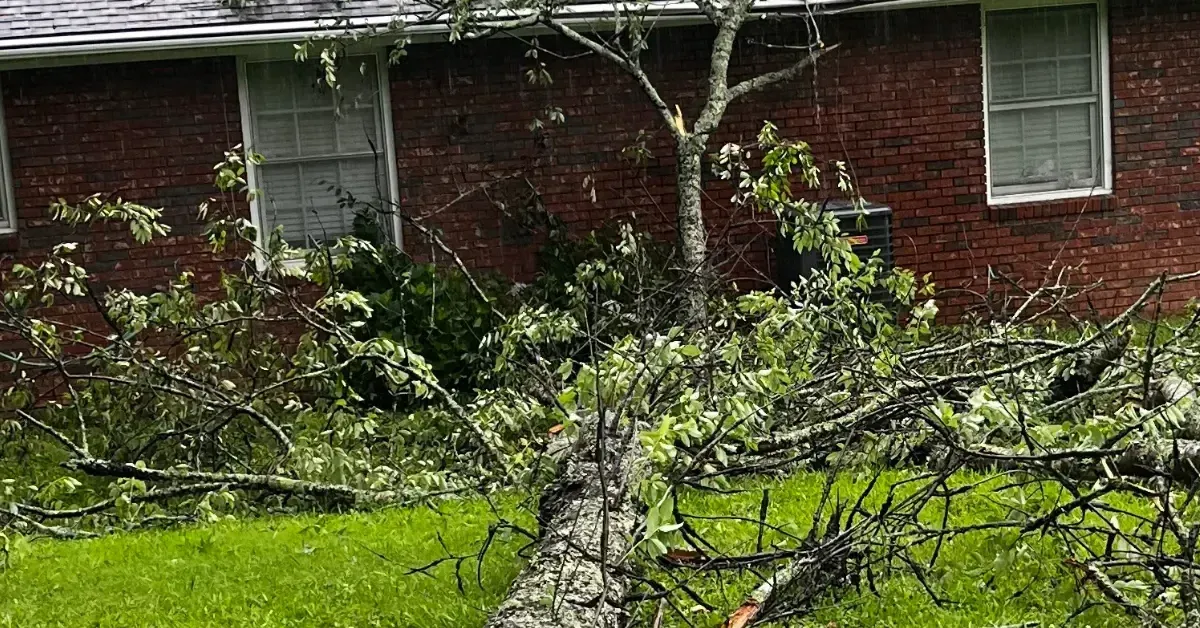
Understanding Storm Damage in Northeast Georgia Trees
The rolling terrain and mixed hardwood forests of Cornelia and Gainesville are highly vulnerable to wind and rain events. Oaks, pines, and maples common throughout Northeast Georgia often suffer limb loss or partial uprooting due to shallow roots and saturated soil.
Main Causes of Storm-Related Tree Damage:
- High winds are snapping large limbs
- Waterlogged soil weakens root systems
- Lightning strikes, splitting trunks
- Falling debris from surrounding trees
- Soil erosion reduces tree stability
Prompt inspection after storms helps determine whether a tree can be saved or must be removed to prevent future risk.
Signs a Large Tree Requires Immediate Removal
Certain signs indicate that a damaged tree poses imminent danger:
- The trunk is split, cracked, or hollow inside.
- The tree leans more than 15 degrees from vertical.
- Major roots are exposed or broken.
- Large limbs are hanging loose above buildings or pathways.
- Bark is missing around the base, or lightning scars are visible.
If you notice these symptoms, do not attempt to cut or stabilize the tree yourself. Contact a professional service with the right equipment for large-scale removal.
Storm Damage Severity Guide
Once you’ve identified the level of damage, the next step is scheduling a qualified arborist inspection to determine the safest removal approach.
| Damage Type | Example | Recommended Action |
|---|---|---|
| Minor | Small broken limbs | Prune & monitor |
| Moderate | Split branches, partial lean | Arborist inspection |
| Severe | Uprooted base, major trunk crack | Immediate removal |
This quick guide helps homeowners in Cornelia, Gainesville, and across Northeast Georgia assess visible damage and understand when it’s time to call for professional tree evaluation and removal services.
Professional Large Tree Removal Process
Step 1: Damage Assessment and Planning
Qualified specialists evaluate the tree’s size, structure, and fall direction. They check for internal decay, electrical interference, and access points before developing a safe removal plan.
Step 2: Safety Setup and Equipment Positioning
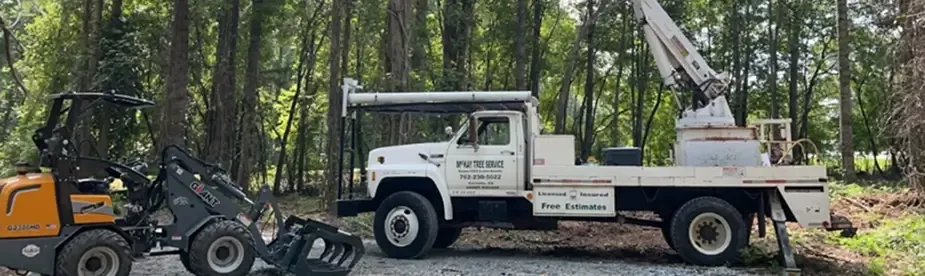
Work areas are cordoned off, and heavy machinery like cranes, rigging systems, and bucket trucks is positioned for stability and reach.
Step 3: Sectional Removal
Instead of felling the entire tree at once, professionals cut it down in sections. Each part is secured and lowered safely to the ground to prevent damage.
Step 4: Stump Removal and Site Cleanup
Once the main structure is cleared, stumps and roots are ground down to prevent regrowth. All debris is removed or recycled as mulch.
Step 5: Final Inspection and Risk Mitigation
After removal, the area is inspected for hidden hazards or secondary damage, ensuring your yard is safe and ready for replanting or repair.
Why Professional Tree Removal Is Safer and Smarter
Large tree removal involves extreme weight, unpredictable tension, and power tools. Attempting DIY removal can cause severe injuries or property damage. Professionals bring experience, insurance coverage, and specialized machinery designed for complex tree operations. Even experienced homeowners often underestimate the weight and tension hidden inside storm-damaged trees.
Key Safety Advantages:
- Use of cranes and rigging systems for heavy lifting
- Ground crew coordination for controlled cutting
- Full insurance for property and personal protection
- Expertise with Georgia soil, terrain, and weather conditions
Hiring professionals ensures that every cut is deliberate, every risk minimized, and every cleanup thorough.
Equipment Used in Large Tree Removal
Professional crews in Northeast Georgia rely on advanced tools and machines for large-scale removal:
- Bucket trucks and cranes for accessing tall canopies
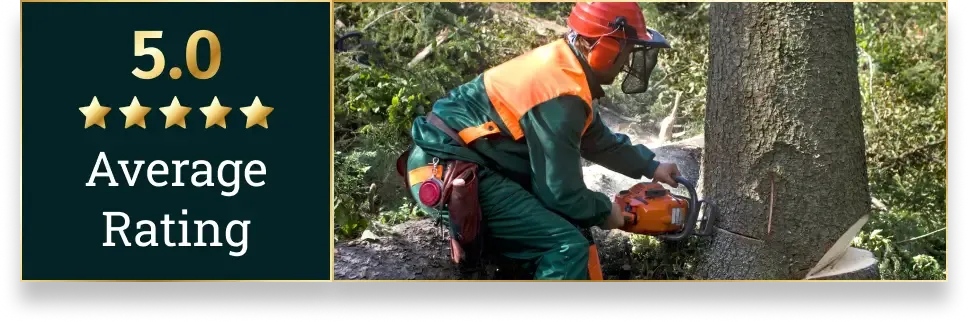
- Chainsaws designed for heavy-duty logging
- Rigging ropes and pulleys for safe branch lowering
- Wood chippers and stump grinders for debris management
These tools allow safe, precise removal even in tight residential spaces.
Handling Fallen Trees Near Power Lines or Structures
If a tree falls on your home, fence, or utility line, contact emergency services or your utility provider immediately before any removal begins. Only trained tree crews with electrical clearance certifications can safely operate near live lines.
Do not attempt to move branches touching wires or hanging over rooftops. Let professionals handle stabilization and extraction using cranes or mechanical lifts.
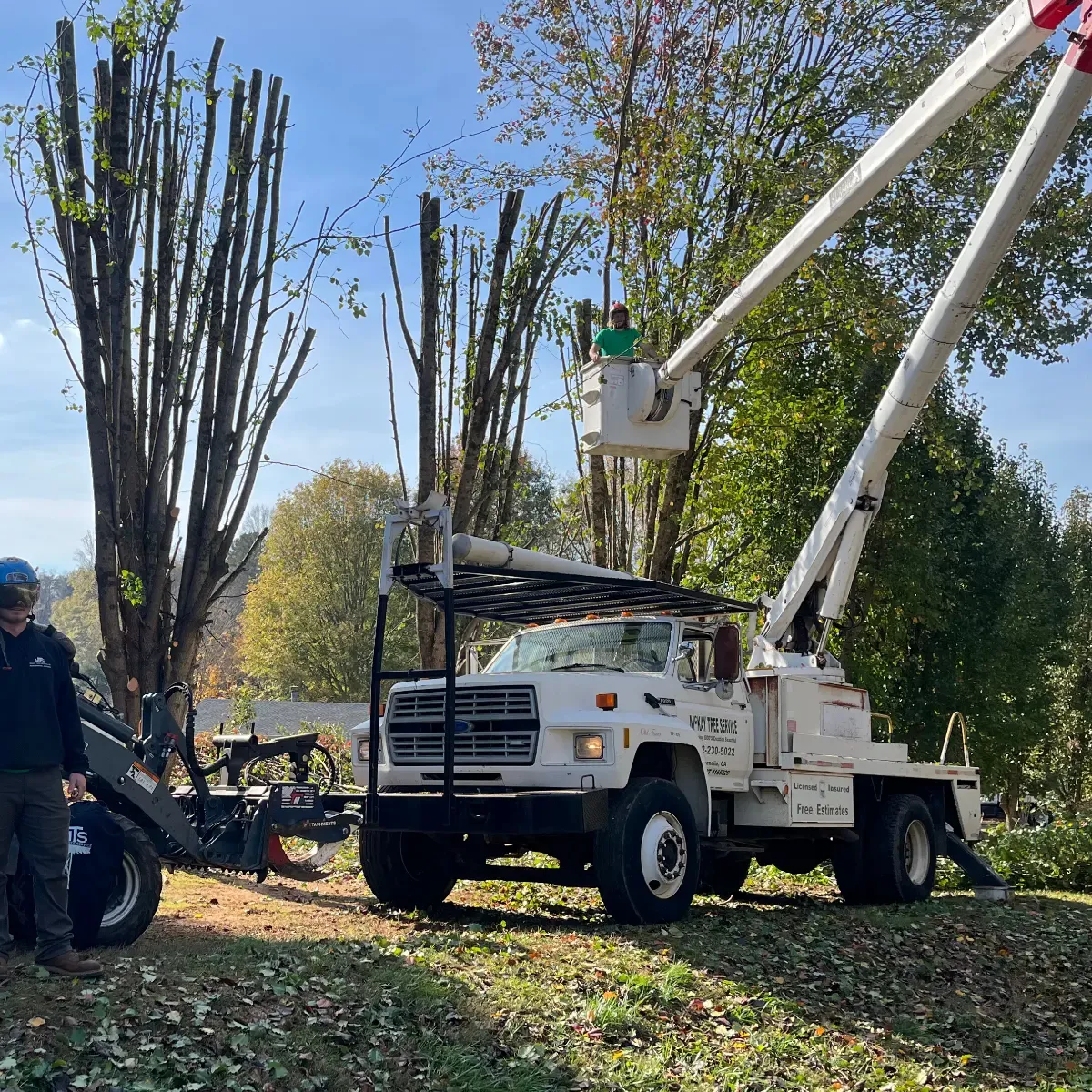
Environmental and Recycling Practices After Removal
Many tree services, including McKay Tree Service, recycle and repurpose wood debris to reduce waste. Logs can be converted into mulch, compost, or firewood. This sustainable approach minimizes landfill use and benefits local landscaping efforts.
If desired, homeowners can request wood chips for garden use or erosion control projects.
Preventive Tree Maintenance Before Storm Season
Large tree failures often result from neglect. Preventive care strengthens structure and resilience.
Pre-Storm Maintenance Checklist:
- Inspect trees annually for decay, cracks, or imbalance.
- Prune weak or overextended limbs before heavy storms.
- Apply mulch around root zones to regulate moisture.
- Remove dead or leaning trees promptly.
- Avoid piling soil or debris against trunks.
Proactive maintenance greatly reduces the risk of storm-related tree emergencies.
Insurance and Liability Considerations for Tree Damage
In many cases, homeowner insurance policies cover tree removal when a fallen tree damages insured structures. Always document damage with photos and contact your insurer immediately after a storm.
Tree removal not directly impacting insured property (such as a tree fallen in a yard) may not be covered. A written estimate from a licensed tree service can help clarify costs before work begins.
Regional Tree Species Most Vulnerable to Storm Damage
Certain species in Georgia are more susceptible to wind or water stress:
- Loblolly Pine: Shallow roots make it prone to toppling in saturated soil.
- Water Oak: Brittle limbs and soft wood cause frequent breakage.
- Maple: Fast growth creates heavy, unbalanced canopies.
- Sweetgum: Dense foliage catches wind, increasing the risk of uprooting.
- Bradford Pear: Weak limb attachments make it one of Georgia’s most failure-prone ornamentals.
Identifying at-risk trees early allows time for bracing, cabling, or preventive pruning before storms hit.
Emergency Response and Aftercare Services
After major weather events, tree services prioritize emergency response for hazardous situations. McKay Tree Service offers 24/7 assistance for downed or damaged trees across Cornelia and Gainesville.
Post-Storm Aftercare Tips:
- Avoid walking under hanging branches.
- Keep children and pets away from damaged trees.
- Schedule follow-up pruning for neighboring trees showing stress.
- Reseed or repair lawn areas affected by heavy machinery.
Following removal, arborists may recommend planting more wind-resistant native trees like southern magnolia or longleaf pine.
Cost Factors for Large Tree Removal in Georgia
Tree removal costs in Georgia vary based on several key factors:
- Tree Size & Height: Larger or taller trees need more labor, equipment, and time.
- Damage Severity: Split trunks, leaning, or uprooted trees add risk and complexity.
- Location & Access: Limited access or proximity to homes and power lines raises costs.
- Tree Type: Dense hardwoods like oak take longer to cut and haul than pines.
- Debris & Cleanup: Hauling, chipping, or stump grinding increases overall pricing.
Because every property and storm situation is unique, qualified arborists in Cornelia and Gainesville provide on-site evaluations to give safe, accurate estimates.
FAQs: Large Tree Removal for Storm-Damaged Properties
How soon should I remove a storm-damaged tree?
Removal should be scheduled as soon as possible to prevent collapse or further property damage. Even partially fallen trees can shift suddenly and cause serious injury.
Can I remove a large tree on my own?
No. Large trees weigh several tons and require cranes, saws, and rigging equipment. Attempting removal without training can be life-threatening.
Does insurance cover tree removal after storms?
Most homeowner policies cover removal if a fallen tree damages your home, fence, or driveway. Check with your insurer for policy details and documentation requirements.
What should I do if a tree falls on power lines?
Stay clear and call emergency services immediately. Never touch or approach downed power lines. Only utility professionals or trained crews can handle electrical hazards safely.
Can a partially uprooted tree be saved?
Sometimes, small trees can be stabilized, but large ones with major root loss usually cannot. A professional assessment determines whether removal or restoration is best.
How long does a large tree removal take?
Depending on size, equipment, and complexity, removal can take anywhere from several hours to a full day. Safety and precision are always prioritized.
What happens to the wood after removal?
Most companies recycle the wood into mulch or lumber. Some offer to leave usable logs for firewood or landscaping upon request.
Do you offer emergency removal services in Cornelia and Gainesville?
Yes. McKay Tree Service provides 24-hour emergency tree removal across Northeast Georgia to handle dangerous situations promptly.
Final Thoughts: Protecting Your Property Through Safe Tree Removal
Large tree removal after a storm is not just cleanup, it’s about restoring safety and peace of mind. Quick professional response prevents further damage, reduces liability, and prepares your yard for recovery.
For homeowners in Cornelia, Gainesville, and all across Northeast Georgia, McKay Tree Service provides safe, efficient, and environmentally responsible large tree removal for storm-damaged properties.