Key Takeaways:
- Safety First: Treat every fallen tree near a driveway as a potential electrical hazard until cleared by professionals.
- Documentation: Take clear photos for insurance claims before any debris is moved or cut.
- Immediate Access: A blocked driveway is an emergency if it prevents medical access or egress for vehicles.
- Professional Gear: Avoid DIY chainsaw work on tensioned wood, which can snap and cause fatal injuries.
- Insurance Navigation: Many policies cover removal if the tree hits a structure or blocks primary access.
In Northeast Georgia, our towering pines and massive hardwoods are part of the landscape’s charm. However, between the heavy ice storms in the winter and the sudden, violent thunderstorms of the summer, these trees can quickly become a logistical nightmare. There is perhaps no more frustrating or alarming discovery than walking out to your car only to find a multi-ton tree completely obstructing your primary entrance and exit.
When a tree falls across a driveway in Cornelia, Gainesville, or Clarkesville, it is more than just an inconvenience; it is a safety hazard and a barrier to emergency services. Knowing how to react in the first sixty minutes can prevent further property damage and ensure the safety of your family.
Step 1: Establish a Safety Perimeter
The moment you realize a tree has fallen, your first instinct might be to walk up to it and assess the damage. Stop immediately. Trees rarely fall in isolation; they often take down utility lines with them. In the dense, hilly terrain of Habersham and Hall counties, power lines can be hidden beneath the foliage or pinned under the trunk.
Assume any line touching the tree or the ground is energized. Keep children and pets at least 30 feet away from the debris. Furthermore, a fallen tree is rarely stable. The root ball may still be under tension, or the trunk may be resting precariously on secondary branches. A shift in wind or the weight of the tree itself can cause the debris to roll or spring back, leading to crush injuries.
Step 2: Check for Utility Damage
Before calling a tree service, perform a visual check from a distance –
- Are the power lines leading to your house pulled taut or snapped?
- Is there a smell of natural gas?
Many driveways in North Georgia run parallel to utility easements. If the tree has damaged a transformer or a pole, your first call must be to Georgia Power or your local Electric Membership Cooperatives (EMCs). Tree crews cannot legally or safely begin work until the power is disconnected and the site is declared safe by a utility technician.
Step 3: Document the Scene for Insurance
Once the area is confirmed safe from electrical hazards, take your phone and document everything. Most homeowners’ insurance policies in Georgia will cover tree removal if the tree blocks a primary point of entry, such as your only driveway.
Capture wide shots showing the entire tree blocking the path, as well as close-ups of any damage to the driveway pavement, nearby vehicles, or fences. If the tree fell from a neighbor’s property, these photos are crucial for determining liability. Do not move any branches or attempt to clean up the small stuff until you have a full visual record of the original impact.
Step 4: Evaluate the Emergency Status
A tree across a driveway is almost always considered an emergency by tree service providers, but some situations are more critical than others.
- Critical Emergency: You are trapped on the property with no other way out, or a resident has a medical condition requiring potential ambulance access.
- Property Hazard: The tree is blocking the driveway and is also leaning against your home or car.
- Standard Emergency: You have a secondary exit, but your primary vehicle is pinned in the garage.
Clearly communicating this status to your tree service helps them prioritize their dispatch, especially during widespread storm events in Northeast Georgia when dozens of trees may be down across the county.
The Dangers of DIY Driveway Clearing
Many Georgians are comfortable with a chainsaw, but a fallen tree is a different beast than a standing one. Fallen trees are full of reactive wood. When a tree is pinned against the ground, certain branches are under extreme tension (spring poles) while others are under compression.
If you cut the wrong branch, the tree can snap upward or roll toward you with thousands of pounds of force. Furthermore, chainsaws can easily kick back when hitting the dirt or hidden hardware within the wood. For trees blocking driveways, the risk of damaging the expensive asphalt or concrete beneath the tree with a chainsaw or heavy-duty truck is high. Professionals use specialized rigging and cranes to lift the tree off the driveway rather than dragging it across the surface.
Navigating the Cleanup: Hauling vs. Mulching
Once the driveway is cleared and you can move your car, you are left with a massive pile of debris. You have two primary options:
- Full Removal: The crew sections the wood and hauls it away to a vegetation landfill. This is the cleanest option, but it adds to the cost due to disposal fees.
- On-Site Processing: If you have a large lot in Habersham County, you might choose to have the wood chipped into mulch or cut into firewood lengths.
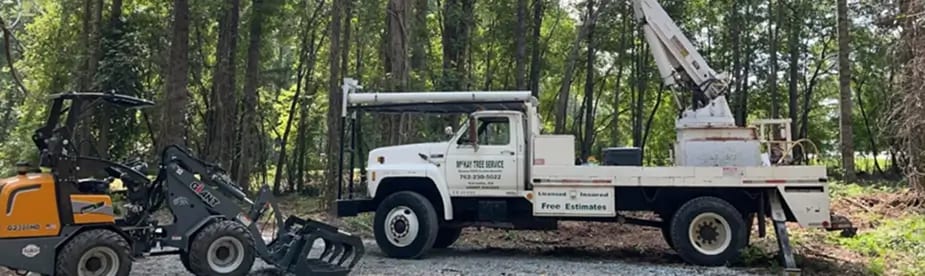
When a tree falls across your driveway, you need more than just a guy with a saw; you need an experienced, rapid-response team that prioritizes your property’s safety. McKay Tree Service is a locally and family-owned company with over 11 years of hands-on expertise serving the Habersham and Hall County communities. As the most trusted 5-star rated tree service in Cornelia, GA, we specialize in 24/7 emergency response for trees blocking critical access points. Our team is fully licensed, bonded, and insured, utilizing specialized equipment to lift and remove heavy timber without damaging your driveway’s surface.
McKay Tree Service understands the urgency of being trapped on your property, which is why we offer prompt estimates and can even assist with insurance billing for storm-related falls. Voted Tree Service of the Year on Nextdoor, we are always committed to respectful, top-quality care for our neighbors in Northeast Georgia. Whether it’s a holiday or a Sunday, we are ready to clear your path and restore your peace of mind. Contact McKay Tree Service today at (762) 227-1035 or visit our office address: 527 Wayside St S, Cornelia, GA 30531.
Frequently Asked Questions by Homeowners in Georgia
Does homeowners’ insurance cover a tree blocking a driveway in Northeast Georgia?
In most cases, yes. If the tree prevents you from using your driveway to access your home, insurance typically covers the cost of removal to restore access, even if no structures were hit.
Can I use my truck to pull the tree off the driveway in Georgia?
This is highly discouraged. Pulling a tree can damage your vehicle’s transmission, ruin your driveway’s surface, and potentially cause the tree to roll into other property or people.
What if the tree that fell belongs to my neighbor?
In Georgia, if a healthy tree falls due to an Act of God (like a storm), it is usually the responsibility of the person whose property it landed on. If the tree was dead and the neighbor was warned, they may be liable.
How quickly can a tree service respond after a storm?
Emergency crews like McKay Tree Service prioritize blocked access calls. Response times vary based on storm severity, but we aim for same-day or immediate clearing.
Will the heavy equipment crack my driveway in Georgia?
Professional crews use ground mats and specialized rigging to distribute weight. Be sure to hire an insured company that specifically mentions property respect.
Should I cover the fallen tree with a tarp?
There is no need to tarp the tree itself, but if the tree hits your house or garage before landing on the driveway, those structures should be tarped to prevent water damage.
What is a spring pole in a fallen tree?
A spring pole is a branch or sapling pinned under the fallen tree that is under extreme tension. When cut, it can snap back with enough force to be fatal.
Can a fallen tree be saved and replanted?
If a mature tree has completely uprooted and fallen across a driveway, it cannot be saved. The root damage and structural stress of the fall are too significant for survival.
Summary Checklist: When to Call for Removal
| Condition | Risk Level | Recommended Action |
|---|---|---|
| Tree Blocking Only Exit | Critical | Arrange emergency removal immediately to restore safe access |
| Tangled with Power Lines | High | Contact the utility provider first, then coordinate with a qualified tree service |
| Resting on a Vehicle | High | Document the damage for insurance and arrange professional removal using proper rigging |
| Stable Tree on Side of Driveway | Moderate | Schedule removal or corrective work before conditions worsen |
| Hanging Widowmakers Above Driveway | High | Keep people clear of the area and arrange prompt professional hazard removal |
Final Advice
Managing a fallen tree across your driveway in Northeast Georgia requires a blend of immediate caution and strategic planning to ensure your property remains accessible and safe. The first and most critical rule is to never underestimate the weight or the tension of a downed hardwood; what looks like a static pile of debris is often a complex puzzle of kinetic energy waiting to be released. In the hills of Habersham and Hall counties, the uneven terrain can cause a trunk to roll unexpectedly once the supporting limbs are cut, making it essential to have professional rigging on-site. Always verify that your chosen tree service is fully licensed and insured specifically for emergency work, as standard policies may not cover the high-risk nature of clearing blocked primary access points. Before the next storm season arrives, take a proactive approach by clearing back over-mature limbs that hang directly over your driveway’s entrance. You should also consider the health of the soil; if your driveway is at the base of a slope, installing proper drainage can prevent the root saturation that often leads to these sudden falls.
Remember, documentation is your best friend when dealing with insurance adjusters, so keep a clear log of the event from the moment of impact until the final debris is hauled away. If you are left with a large stump near the edge of your driveway, prioritize professional grinding to prevent the wood from rotting and creating a subterranean void that could eventually undermine your pavement. Regular inspections by a certified arborist can identify leaners or trees with internal decay that represent a liability to your daily commute. By treating every fallen tree with the respect its mass deserves, you protect not only your vehicle and your driveway surface but also the safety of everyone on your property. Remember that a clear path is essential for emergency vehicles, so making that first call to a trusted local expert is the most responsible step you can take.