Key Takeaways
- Electricity can arc from a power line to a tree branch without direct contact, creating a lethal fire hazard.
- Homeowners are legally and financially liable for damages if private trees interfere with public utility lines.
- Standard pruning techniques do not apply near high-voltage lines; specialized insulated tools are mandatory.
- High winds and ice storms turn overgrown branches into projectiles that cause widespread grid failures.
- Hiring a licensed, bonded, and insured professional is the only safe way to manage utility-proximate vegetation.
Trees are an indispensable part of our landscape, providing shade, increasing property value, and enhancing the aesthetic of our neighborhoods. However, when the vertical growth of a tree intersects with the horizontal path of overhead power lines, a serene landscape can quickly transform into a high-stakes safety hazard. Managing overgrown trees near utility lines is not merely a matter of curb appeal; it is a critical necessity for fire prevention, grid reliability, and the preservation of human life.
Understanding the physics of electricity is the first step in recognizing the gravity of this issue. Many people believe that a tree branch must physically touch a wire to cause a problem. In reality, high-voltage electricity can jump or arc across an air gap to a nearby limb, especially in humid or rainy conditions. Once a branch becomes energized, the electricity travels through the trunk and into the ground, potentially electrocuting anyone nearby or sparking a fire that can consume a home in minutes.
The Conflict Between Nature and Infrastructure
Modern power grids are designed to be robust, but they are highly vulnerable to external interference. Overgrown vegetation is the leading cause of power outages across the United States. When branches grow into the primary wires, they can cause short circuits, leading to blown transformers and flickering lights. During storm season, the weight of ice or the force of high winds causes these limbs to snap, dragging down lines and poles.
Utility companies often have easements that allow them to trim trees back to a certain distance, but the responsibility for secondary lines (the ones running from the pole to your house) often falls on the property owner. This creates a dangerous grey area where homeowners might feel tempted to grab a ladder and a pair of loppers to save money. This is a potentially fatal mistake. Wood, particularly when damp, is a conductor. Using metal tools or even wooden ladders near these lines creates a path for electricity to reach the ground through your body.
The Dangers of Arc Flashing and Grounding
When a tree comes into contact with a power line, it can create what is known as a ground fault. This means the tree has become part of the electrical circuit. If a person or an animal touches the tree at that moment, the results are almost always fatal. Furthermore, an energized tree can cause the surrounding soil to become electrified. This phenomenon, known as a step potential, means that simply walking near a tree that is touching a wire can result in an electric shock.
Arc flashing is another severe risk. An arc flash is a light and heat explosion caused by a low-impedance connection through air to ground or another voltage phase in an electrical system. These flashes reach temperatures hotter than the surface of the sun and can cause third-degree burns from several feet away. Trees that have grown too close to lines significantly increase the frequency of these events during high winds.
Regulatory Standards and Right-of-Way
Managing these hazards requires a deep understanding of Right-of-Way (ROW) maintenance. Utility companies follow strict guidelines set by the American National Standards Institute (ANSI) and the Occupational Safety and Health Administration (OSHA). These standards define the minimum clearance required between vegetation and different types of electrical lines.
For homeowners, understanding these zones is vital. The wire zone is the area directly under the wires, while the border zone extends outward to the edge of the easement. In these areas, only low-growing shrubs or small decorative trees should be planted. Planting a fast-growing species like a Leyland Cypress or a Silver Maple directly under a power line is a recipe for future disaster. Within a few years, these trees will require aggressive topping, which ruins the health and structure of the tree, often leading to its premature death and subsequent fall risk.
Why Professional Intervention is Mandatory
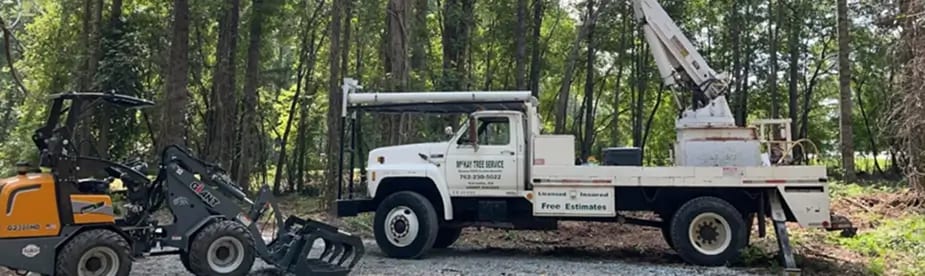
Vegetation management near utility lines is a specialized field within arboriculture known as utility line clearance. It requires tools and training that are far beyond the scope of a standard landscaping crew. Professionals use non-conductive, fiberglass-reinforced plastic tools and specialized bucket trucks designed to operate safely in high-voltage environments.
Directional Pruning and Tree Health
A certified arborist understands how to prune a tree to direct its growth away from the lines. This technique, known as directional pruning, removes the branches that are growing toward the wires while leaving the branches that grow away from the lines intact. This maintains the health of the tree and reduces the frequency of necessary maintenance. Attempting this without the proper training usually results in improper cuts that invite pests and disease, eventually hollowing out the tree and creating a new hazard: a dead tree standing next to a power line.
The Impact of Weather Events
The danger of overgrown trees is amplified tenfold during extreme weather. In the winter, ice accumulation on a single limb can add hundreds of pounds of weight. This causes the branch to sag onto the lines or snap entirely. In the summer, thunderstorms bring high-velocity winds that can uproot a tree that has been weakened by poor pruning or root rot.
When a tree falls on a power line, it does not just affect the property owner. It can knock out power for an entire hospital, emergency services, or vulnerable neighbors who rely on medical equipment. Proactive management, identifying and removing hazard trees before the storm hits, is the only way to ensure community-wide safety.
At McKay Tree Service, we understand that managing trees near power lines is one of the most dangerous tasks a property owner can face. Our team brings over 11 years of hands-on experience and a 5-star reputation to every job in Habersham and Hall counties. As a locally and family-owned business in Cornelia, GA, we are fully licensed, bonded, and insured, providing the specialized equipment and expert knowledge necessary to handle high-risk utility clearance safely. Whether you need a 24/7 emergency response for a fallen limb or proactive tree trimming to prevent a disaster. We proudly support our community with free estimates and special discounts for military and first responders, ensuring your property remains safe and your power stays on. Contact us at (762) 227-1035.
Frequently Asked Questions
1. Who is responsible for trees touching power lines?
Generally, utility companies handle the main lines, while homeowners are responsible for the service drop line leading to the house.
2. Can I trim a tree near a power line myself if I use a wooden ladder?
No, you should never attempt this. Even wood can conduct electricity if it contains moisture or dirt.
3. What is directional pruning?
It is a professional technique that removes specific branches to encourage the tree to grow away from utility lines.
4. How far should trees be planted from power lines?
Tall-growing trees should be planted at least 20 to 50 feet away from the center of the utility pole.
5. Does a tree have to touch a wire to cause a fire?
No, electricity can arc across the air from the wire to a nearby branch without physical contact.
6. Will the utility company cut my tree down for free?
Usually, they will only prune it to clear the lines; if the tree needs total removal, that is typically the owner’s cost.
7. What are the signs that a tree is about to fall on a line?
Look for deep cracks in the trunk, mushrooms at the base, or a sudden change in the lean of the tree.
8. Are some trees better to plant near lines than others?
Yes, look for low-growing species that reach a maximum height of 15 to 20 feet at maturity.
Summary Checklist: Power Line Hazards
| Condition | Risk Level | Recommended Action |
|---|---|---|
| Branches within 10 feet of utility lines | High | Arrange qualified utility line clearance pruning as soon as possible |
| Sparks or smoke visible in the canopy | Critical | Leave the area immediately and contact emergency services plus the utility provider |
| Heavy vine growth on utility poles or near lines | Moderate | Report vegetation interference to the utility company for proper clearance management |
| Dead tree leaning toward power lines | High | Arrange urgent hazard assessment and controlled removal before severe weather increases failure risk |
| Branches touching the service drop | Moderate to High | Arrange safe clearance by qualified professionals experienced with electrical proximity work |
Final Advice
If you notice any of these warning signs, do not wait for a storm to force the issue. A professional assessment from an arborist can determine if the tree can be saved through specialized care or if it must be removed to protect your property. When dealing with power lines, the most important rule is to maintain a safe distance at all times. Never attempt to use a pole saw or any equipment near energized wires, as the risk of electrocution is immediate and permanent. Check your local municipal codes and utility easements before planting new trees to ensure they will not become future hazards.
Proactive maintenance is significantly less expensive and much safer than dealing with an emergency power outage or a house fire caused by an arc flash. Always verify that any tree service you hire is specifically insured for line clearance work, as standard residential insurance may not cover accidents involving high-voltage utility infrastructure.